In the course of my over three decades of antique santo collecting, I wish I could say I have seen everything, been there, done that. But as they say, collecting takes a lifetime, and you never really stop looking around. That's collector's instinct!
But I certainly have seen a lot, and this article is all about that—the things my eyes have seen through all these years—beautiful santos, ugly santos, folk santos, elaborate tableaus. Then there are the antique shop pieces that I could not afford, pictures of ivories e-mailed to me for my consideration, heirlooms for sale by families, tabletop images peddled by middlemen. And what about those santos that got away? I have since retired from santo collecting, but whenever I see these pictures, I still get a tinge of regret, leading me to ask myself—now, why didn’t I get that? I don’t even know what happened to these santos—most of them, I presumed must have been sold, re-sold or in still on somebody’s shelves, as these were taken many years ago.
SANTO NINO DE TONDO PRINT. This is just a vintage print, but I thought this Sto. Nino of Tondo. Manila vintage illustration on paper is a nice piece. Maybe this was a souvenir print sold during the fiesta of Sto.Nino. The original frame is so 1950s. But then, my walls are already crowded with paintings and framed artworks.
UNIDENTIFIED MALE SAINT. A friend sent this photo of a chapel-sized santo of a male saint for identification. I thought it looked like either St. John Berchman or St. Gerard Majella. But the habit is all wrong for either of the two. For once, I was stumped.
SAGRADA FAMILIA, ANTIQUE BONE. I got all excited when a dealer showed me this picture of the Holy Family, which looked like they have ivory parts. but I am convinced they're of bone. Just look at where they are...are they being kept in the pantry? Well, the owner of thes eimages supposedly changed his mine, so goodbye Jesus, Maria y Jose!
CALVARIO. I was snooping around Cubao, when I chanced upon this very large figure of a crucfied Christ. Looks very 50s to me, and well made. I made an even startling discovery when I found two companion pieces--a San Juan and a Dolorosa--lying close by. So, this was a Calvario tableau after all! But too expensive--I think the dealer read my reaction. besides, the tableau is humongous, I can't put it on my dining table!
SAN ISIDRO LABRADOR. I was invited by dealer to see some pieces in her Angeles warehouse, but I ended up eyeing this 40 inch San Isidro de Labrador--with a chopped nose. There it stood on her dresser, along with new Santo Ninos for contrast. The 3 foot image is exquisitely carved and has a nice patina--surely, this is century old! I wanted it--despite the fact that it had no cows, angel and the kneeling landlord. I made an offer that was soundly rejected, and I came home empty-handed.
SAN ANTONIO, ANTIQUE IVORY. A dealer apparently got my e-mail address from a friend, and introduced herself to me. ong with her mail came a pai of santo pictures---they are for sale, she said. The first piece is an all-ivory San Antonio with beautiful estofado painting on his vestments still intact, thanks to its virina. The santo wears a silevr halo, and stands 8 inches tall.
CRISTO CRUCIFICADO. The second ivory image looks to be much older--as the all-ivory corpus of the crucified Christ has mellowed to an earthly orange-brown color. All the silver accessories are intact, which makes the oiece more appealing to me. The dealer promised to get bck to me for the prices, but she never did. Well, just form the looks of these pieces, I don't think I can afford them anyway!
ANTIQUE CALVARIO, IVORY AND WOOD. How can I forget this piece?? A Guiguinto dealer sent this picture by phone which I got while I was in transit--riding a car. It is surprising that the figure of the crucified Christ is the only one in wood, not ivory. But the manikin figures that surround Him--Mary. Magdalene and John--are incredible pieces. The problem was--I dilly-dallied and deferred my visit to the shop--and so it went to to a collector with more conviction, and with more money, for sure.
SAN PEDRO FOLK SANTO. My opinion is always solicited by few friends before they buy a santo, so that's how I got my reputation as the go-to person when it comes to santo evaluation and pricing. I am flattered, but I don't consider myself an expert, I guess I am more exposed becuase I go out a lot, even with 20 pesos in my pocket. This charming folksy, younger-looking San Pedro, around 2 foot tall, was being considered by my friend. It even has his "bulik" rooster by his side. The colors are strong and vibrant. And that santo face!!! Doesn't the saint look like Bruno Punzalan? So, what better advice to give my friend than to tell him--"get it, get it!"
SAN JUAN BAUTISTA. I ws alerted by a Bulacan dealer about this museum quality San Juan Bautista that looks so ancient, by all standards, Just look at the facial carving, the details of the hair and the belted camel-hair garment. As expected, the colonial santo carried hefty 6-digit price tag. I just looked and sadly turned away. I heard that the piece went dealer-hopping before it found a buyer in Manila.
SANTO NINO, POLYCHROMED SANTO. I got all excited when my suki from Bangkal, Makati sent two Bohol santo images that she said were on their way to her thrifts shop. I coul not believe my eyes--one was a Sto. Nino with a tin crown, brilliantly painted and stnding on a four-cornered rococo base. The other hitch was that---they have no prices yet. Hmmm..Red flag alert! And then I saw the next piece...
INMACULADA CONCEPCION, POLYCHROMED SANTO. A small Bohol Virgen with a trademark cherub at her foot!! She wears a tin crown, and robe full of wavy folds and drapes. Her coloring was superb!!! But then, when they finally arrived, the santos had sustained some damage. The crown of the Sto. Nino and the facial aureole of the Inmaculada were crushed and ruined. Worse, the owner threw them away!! The price for the two could have been reasonable, but I asked for a discount considering the loss of the metal accessories. But the owner was firm, and I lost interest. Next!
SAN ANTONIO VINTAGE SANTO. While still in Bangkal, Evangelista, Makati, I saw this vintage San Antonio painted in house paint. Not exactly my cup of tea, but I was struck by the square-jawed saint who sort of reminded me of Dick Tracy.
LA PIEDAD. This Holy Week processional santo showing the Mary cradling her Son, the dead Christ, though carved in the classical tradition, lack the flowing lines of other La Piedad images I have seen. The poses are a bit rigidd, almost stiff. But that does not retract from the value of this old image. The owner was vacillating whether to sell it or not--so I thought it was better to give him more time to think about it. I never saw the images again.
STA. VERONICA. This small processional image of La Veronica was offered to me sometime in the mid 1990s by a San Fernando dealer. Though old, I really din't like it because it was so expressionless (missing glass eyes), and was carved without flair. See how ramrod straight she stands? Sometime in early 2000s, it resurfaced in the house of another dealer in Sta. Rita. Is she following me after her rejection? Well, I rejected the image again.
MATER DOLOROSA, ANTIQUE IVORY. There was this dealer I met who kept cajoling me to check out his stock. I actually did and found nothing of interest. When he sked me what I was looking for, I said I was looking for an ivory Dolorosa. He got my number and promised to get back to me. Months later, I had a call from him--he wanted to check a Dolorosa that was with him. nd it was for sale. I rushed to his shop and found this lovely piece! I wanted it! Problem was, he said he has to confer with the seller for the price. Disappointed, I left his place.When I called him again, he said that the price has been sold, better luck, next time. Nope...there will be no next time.
SAN ROQUE. This is a tall image of San Roque--and it is complete. As you can see, the best carved figure is the saint himself; the angel and the dog are mediocre works, maybe done by a separate carver.Though complete and not too expensive, I was not sold on this image. That's maybe how other collectors may have felt, too, as the piece went from one shop to another and went unsold for many month
SAGRADA FAMILIA FOLK SANTOS IN A VIRINA. When i was still working in Makati, I would take the train from Ayala station so I could have lunch at Shangrila Mall. There was also an an antique shop there, and this folk grouping of the Holy Family caught my eye--only because the oval virina and its original base was more appealing to me than the images. Alas, the seller said I have to buy the whole assemblage, which does not make sense as the wooden folk santos are better off displayed in a folk urna. I had heavy dessert instead.
\
STA. RITA DE CASCIA. When I chanced upon this spectacular church-size santa carved in the round, I stood stupefied. It was beautiful!!! It had this imploring look on her face that semm ot say--"buy me! buy me!". I wasn' sure as to her identity, but my instinct tells me she is Sta. Rita, despite the absence of her trdemark stigmata (or perhaps, I didn't check her forehead due to extreme excitement. I wasn't too sure of her age either. But most of all, I wasn't sure if this was stolen and carted off by unscrupulous thieves for sale to Bulacan dealers. So I held off--I remember it was priced at 70 thousand. I just took a picture and never came back.
INMACULADA CONCEPCION ANTIQUE IVORY. Well, I came back for this ivory Maria many times--at the shop of the late Ramon Villegas at La O center. For some reason, I was fascinated by this piece, which stood almost 16 inches tall (see how her head is touching the tip of the virina). I guess it's the simplicity of the carving, thiugh not as finely carved, the face exudes an expression of serenity, with a calming gaze. Mon even told me about the image's provenance; he said it came from cfrom an old Quiapo family. I think I visited the shop 4 times, but never got around to making a decision to take her home. When I last visited his shop, his ivory angels were all snapped up, but this Inmaculada remained. When Mon died, I regretted not getting this, even more. Sigh,
Monday, February 5, 2018
Sunday, January 21, 2018
301. My Guardian Dear: THE MAKING OF SAN ÁNGEL CUSTODIO
Who would think that this magnificent representation of
the Guardian Angel--El Angel de la Guarda or Angel Custodio---was fashioned
from old santo parts and new pieces by the noted restorer, Dr. Raffy Lopez?
A decade ago, a close friend of mine, Robby Tantingco, discovered the
wonderful world of santos. As he was connected with Holy Angel University for
many years, he explored the idea of having a santo of the Holy Guardian Angel,
the patron of the school.
In fact, the university chapel houses the 1830 wooden
image of San Angel Custodio, which once
belonged to the founder of Angeles, Don Angel Pantaleon de Miranda. The image—which
shows the Guardian Angel holding the hand of a child, was passed on to a series
of descendants, until it was inherited by Juan D. Nepomuceno (1892-1973), Don
Juan was inspired to name the school he founded after the Guardian Angel,
hence--Holy Angel University, now the largest university in Central Luzon.
![]() |
| GUARDIAN ANGEL PANINTING, 1516 by artist Domenichino. Source: wikipedia |
The representation of the angel protecting children is
common in Catholic imagery. In art, the Guardian Angel is shown with his right
arm raised, with a finger pointing heavenward; he holds the hand of a child
with the other.
However, images of the
Holy Guardian Angel are seldom seen in the Philippines. Thus, the choice to
have a San Angel Custodio as my friend’s first santo, was both appropriate and
perfect!
It was serendipitous that I just bought an antique ivory
head of a Virgin. Without a wig, the ivory head with glass eyes looked rather
androgynous—just like the way that angels are represented. I convinced the
first-time collector to invest on an ivory image for his very first santo, and
I volunteered to supervise its reconstruction.
Off to Dr. Lopez the antique ivory head went, the only
piece he would work with, at the start of the project. Guided by a picture of
the original Holy Angel school image, he decided to make an ivory image copy of
it.
![]() |
First, all the ivory parts missing were ordered for the
Angel (a pair of hands) and the Child
(ivory head and hands), all made with pre-ban ivory. These were assembled on
wooden manikin bodies, and when done, the Angel stood 12.5” tall and the Child,
6” high. The Angel only had to be
retouched to make it look a bit masculine, while the Child’s features were painted.
Meanwhile, the satin vestments were created, also
inspired by the original. The Angel wore a full-length, belted tunic with
floral gold thread embroidery, while the Child’s was blush peach. New wigs, and
metal accessories—including the highly detailed silver-plated brass wings
(copied from an old San Vicente Ferrer)—were sourced from local metalsmiths.
The mortar-shaped base with an oval top was a more
stylized version of the antique silver base of the original school image. The
cloud designs were hammered (‘pukpok’) on brass panels, that were then
silver-plated and attached to the wood base.
When the costumed images were staged and finally set on
the base, the result was a new, beautiful San Angelo tableau, which, though not
100% antique, is definitely worth as much for the new santo owner, what with
the amount of effort, care, and labor of
love that went into its making. Ever
this day, his very own Angel Custodio will certainly be by his side—to light and guard,
to rule and guide!
Sunday, September 3, 2017
300. MY FIRST SAN ROQUE
San Roque (St. Roch of Montpellier)-- along with San Vicente Ferrer, San Isidro Labrador, San
Jose--are perhaps the most popular santo devotions in the early days of our
Christianization, this, based on the abundance of images carved in their
likeness. San Isidro was a natural
choice for an agricultural country, while San Jose, well, he was Jesus’ father.
The winged San Vicente was known as an “angel of the Apocalypse”, and angels,
too, appear in the iconographies of San Vicente and San Isidro Could it be our
fascination with heavenly winged messengers that drew Filipinos closer to these saints?
Our Spanish colonizers, in order to facilitate their
evangelization, introduced us to San Roque, his life and his works---how he
ministered to the sick in plague-ridden Italy, until he got ill himself. He
retreated to a cave where a dog came to bring him bread for sustenance, and
licked his wounds that healed them. After his death, an angel was said to
descend from heaven, holding a tablet which he laid on the head of the saint.
On it was written a prayer, which declared that anyone who calls on San Roque
will be spared from any pestilence.
Because of this, the friars urged the Filipinos to invoke
the saint against epidemics and “peste”, cholera, most specially. People also dropped down on their knees to
appeal to San Roque to cure their skin ailments, relieve the pain of bad knees,
and keep their dogs healthy.
I can’t even remember what particular shop I brought my
first antique San Roque. I do know that I got it in the early ‘80s from one of
the stores in Mabini Art Center, then one of the ‘antique’ enclaves of Ermita.
I paid exactly Php 170 for this primitive folk example, which came complete, although its head seemed
to have fallen off and then reattached at some point. I guess this was why I
got it for that bargain price, as you can get a perfect set back then for Php
300.
The 12 inch., rather thin San Roque stands on a plain, rectangular
base, adding ¾” of an inch more to its height. His head sits askew on its
shoulders; I had thought it was due to the bad restoration, but I had the head
properly re-attached since, and it seems it was really carved with an awkward
tilt. The saint’s eyes are bulgy, the beard full, and the mouth is wide.
Wearing a pilgrim cape and a short tunic, San Roque is
shown lifting the hem high to reveal the wound on his left knee. There is quite
a distance between his pointing finger and the location of the wound though.
Note also how rough the folds of the tunic are carved,
He holds a staff with his right hand—I lost the original staff when one of his fingers broke—the one that secured it in the first place. What he now holds is a replacement fashioned from a bamboo barbecue stick. In place of a carved water flask, I just hanged a tiny metal bell.
The unimpressive angel—carved from a narrow piece of wood—stands
7 inches, and no longer has its tablet. It could have been made of tin, on
which a native ‘oracion’ would have been handwritten. The native dog has broken
one rear and one front foot, but it has
still the ‘pan de sal’ firmly between his teeth.
I have kept this San Roque for some thirty years—unappealing
it might be—primarily for sentimental reasons. I bought it at a time when I had
the audacity to start a relatively expensive hobby, while struggling to make a
living. The thought of acquiring better
quality santos was farfetched from my mind, I had no choice but to buy only
what I could afford—often the headless, armless, imperfect ones--the kind Mabini
dealers regularly pass up. In all those years that I’ve had San Roque with me,
I have neverbeen visited by any pestilence nor afflicted by a malady of the serious kind---except
perhaps, antique addiction!
Labels:
antique dealer,
antique shops,
antiques,
collecting,
colonial santo,
Ermita,
folk art,
folk santo,
Mabini,
Manila,
San Roque,
santo collection
Sunday, August 27, 2017
299. Guided by the Light: THE MAKING OF A NTRA. SRA. DE GUIA
In my early collecting years, I must admit I was guided by impulse more
than judgment, when buying antiques. That is what happened around 1983, when I
made a decision to purchase my first ivory santo, a brown Virgen from the ramshackle shop
of Momoy Cabuenos on Arquiza St. which had been there on display for over a
month.
![]() |
| The brown ivory image, with new base. new wig, original clothes. 1983. |
It was not exactly what I wanted—it looked folksy, but definitely
old—having browned with age. The solid ivory head was set on a crude body with
wire armature arms, on which small “tinidor” brown ivory hands were attached.
It had no base, and the old tattered, abaca-lined clothes came with the
deal—Php 3,500—the exact amount of money in my pocket.
Had I been more patient, I could have saved more and
could have purchased a better- looking santa, but at that time, all that
mattered was this desire to have my first ivory image, period.
It took only a
week or so, to realize the “folly” of my purchase, for as soon as I took it
home, cleaned it, dressed it and affixed it on cheap-looking, gold-tinged base,
I was, to say the least, disheartened. Even with a wig, a crown and a virina,
the Virgin looked stiff and unappealing.
I usually take pictures of my santos upon their complete
restoration, but not this image. I just
put it behind some of my more better-looking, classically-carved santas I
acquired in the years that followed, and stayed in that relegated position for
years.
![]() |
| The image, as kept in a corner, next to a ivory Sta. Veronica. ca. 1983. |
When I became acquainted with the works of Dr. Raffy
Lopez around 10 years later, I decided to show the image to him to see if
there’s any way to give her some “character”, as she looked so plain and
ordinary. Dr. Lopez was fascinated by the deep brown coloration of the
image; he even praised its naïve
features and folksiness.
He then pored over his files and showed me a picture of
Ermita’s famed patroness, the oldest Marian image in the Philippines—Nuestra
Señora de Guia (Our Lady of Guidance).
History tells of its discovery by
Legazpi’s men in 1571—the hardwood, 20 inch figure was found resting on a clump of pandan leaves being
adored by natives. It was assumed to have been left behind by Spanish
missionaries who came to the islands earlier. “This is going to be your image”,
he said.
It was a perfect choice, all things considered. What’s
more, the Marian title had a special
connection to my hometown, Mabalacat. The Estado General of 1879 reports that
the Mabalacat parish was elevated to a vicariate status under the titular
patronage of Nuestra Snra. De Guia most
probably around 1836—so that sealed it for me.
In the next few months, Dr. Lopez undertook the conversion
and restoration of the ivory image. The long, unproportional body had to go,
and a new one was made. Features like eyebrows and lashes were added on to the brown
ivory face.
A cloud base was carved, while a latero meticulously
carve the pandan leaves from tin plates that were then painted green.The blue
green cape and ecru tunic of satin were sewn, gold-embroidered with pandan leaf
and floral motifs. A new set of crown and 12-star halo were ordered. Only the
wig with its long, wavy hair was saved.
When the assembled image was presented finally to me
after 2 months, I could not helped but be overwhelmed by its incredible
transformation. The brown Madonna that I used to conceal behind other, prettier
ivory santas now possesses a quiet, dignified beauty unlike any other, thanks
to the guidance of Dr. Lopez.
Today, in
my little home, my Ntra. Sra. De Guia now stands centerstage in one shelf, reserved for the most special and most
precious santas in my collection.
Friday, August 18, 2017
298. ANTIPOLO, by Ileana Maramag
People make yearly pilgrimage to this Rizal town to pay homage to centuries-old Brown Madonna.
By Ileana Maramagpublished in The Sunday Times Magazine, 20 May 1962.
Still drawing a steady stream of pilgrims at this time of
year is Antipolo, the small hilly town in Rizal province made famous as the
shrine of the centuries-old brown Madonna as Our Lady of Peace and Good Voyage.
Antipolo, however, is not what it used to be. In the
olden days, old folks like to recall, the place was no more than an isolated
hamlet that could only be reached by carretela or cascos, via one of the Pasig
River’s tributaries that wends its way to several Rizal towns. Thus, pilgrimages
to the Virgin of Antipolo in those days were more hazardous and involved no
small amount of sacrifice.Often enough, the pilgrims had ti hike the slippery
trails of the region or cross the difficult terrain in man-borne hammocks.
Aisde from this, the pilgrimages were made more festive by the bright parasols,
colorful balintawaks and camisas de chino worn by the pilgrims, Today, the
practice has all but disappeared; Antipolo is easy to reach via paved highways
and modern-day pilgrims make the Maytime trek in buses or drive down the 28 km.
road to Antipolo in snazzy cars,
From Manila, it takes no more than 45 minutes to reach
the town proper, and once ed there, pilgrims converge at the modern church
which is easily Antipolo’s biggest landmark. Once inside, one discovers that
the age-old image of Our Lady of peace and Good Voyage is enshrined in a
special niche atop the main altar.
Annually, on May 1st, by tradition, the Virgin
is borne in solemn procession to an improvised altar atop Pinagmisahan Hill, where
a mass is said to commemorate the first Mass celebrate by the early Spanish missionaries
on the same hill. Devotees also mark the feast of Antipolo Virgin every first
Tuesday of May.
Early historians report that the image was first brought
to Manila from Mexico on June 29, 1626 by the then newly-appointed Governor General
Juan Niño de Tabora to isnure the safe voyage of the galleons against pirates
and typhoons.
No one can tell exactly how the Virgin became enshrined in
the town of Antipolo. There are two versions. One reports the image was taken
to the Rizal town by the Governor general and Archbishop and crowned as Nuestra
Señora de la Paz y Buen Viaje. Another account says the statue disappeared and
was found perched atop an antipolo tree, on the same spot where the Antipolo
church now stands.
Another legend tells of how the Virgin of Antipolo
acquired its dark color. The story goes that during the 1639 Chinese Rebellion
(which include Rizal and Laguna towns),
the Chinese burned the statue but somehow the image miraculously remained unscathed.
Instead, the carving turned black and has retained its dark hue through the
centuries.
When the Japanese commandeered the old Antipolo church
and used it as their garrison during the last war, devotees smuggled the image,
buried it in a drum, and later transported it to the Quiapo Church where it was
enshrined until after the Liberation.
Friday, July 28, 2017
297. Lost for 36 Years: LARAWAN NG SANTISIMA TRINIDAD, of Brgy. Santisima Trinidad, Malolos
It has been a long 36 years since the ancient icon of the miraculous Holy Trinity (“ Larawan ng Mapaghimalang Santisima Trinidad”) of a Malolos barangay with the same name, disappeared on 27 October 1981. Known variously as “Santisima Trinidad na Orihinal”, “Santisima Trinidad na Antigo”, and “Santisima Trinidad na Matanda”, it has been enshrined ever since at the main altar of the visita of Brgy. Santisima Trinidad.
![]() |
| In this 1963 photo, on can still discern the Santisima Trinidad on the top niche of the main altar of the chapel. |
The visita itself was built on 4 May 1863. Stories have
it that when the field was being cleared by workers for the erection of the
visita, they unearthed an icon bearing the image of the Holy Trinity, painted
on 4 wood panels pieces. The 26 x 36” painting shows the 3 divinities—God the
Son, God the Father, and God, the Holy Spirit seated together, with hands
raised in benediction. As a tribute to the Trinity, the chapel and th barrio
was put under their titular patronage.
Since then, three more Santisima Trinidad icons have
joined the original one at the visita-- Santisima Trinidad na Mayor, a Mexican
painting on canvass, and considered the oldest of the 3 callejeras
(processional images); Santisima Trinidad na Bata, an oil painting on rosewood,
ca. 1762; and the Santisima Trinidad de Trisagio, a 22 x 27” image placed in
the safekeeping of the caretaker or “hermano trisagio”.
But it is the original “larawan” that remained in the altar mayor for as long as one can remember, around which the people of the barangay anchored their faith, love and devotion. In time, the chapel was shared with two other barangays, Barihan and Pinagbakahan.
![]() |
| Photo souvenir with the original Santisima Trinidad |
But it is the original “larawan” that remained in the altar mayor for as long as one can remember, around which the people of the barangay anchored their faith, love and devotion. In time, the chapel was shared with two other barangays, Barihan and Pinagbakahan.
![]() |
| SANTISIMA TRINIDAD NA BATA, dated 1762 |
Over the years, miracles have been attributed by residents
to the workings of the Santa Trinidad—impossible favors granted, incurable afflictions healed, and babies safely
delivered despite delicate pregnancies. The 3 barangays celebrate the fiesta of
their revered patron annually, every Trinity Sunday, while in separate feast in
October is celebrated for their secondary patron, Birhen ng Santo Rosario.
In 1981, the year when the old chapel was scheduled for
demolition to give way to a new, more expansive building, a most unfortunate
event happened. On October 27, the original Santisima
Trinidad was stolen from the central niche of the altar. All efforts were exerted
to find the lost icon and the criminals who committed this dastardly act—to no
avail.
When all hopes seemed lost, a generous family from
Olongapo—the Bartletts—donated 3 vintage 1950s dressed mannikin
images (de vestir) to the chapel of the much-saddend barangays. From Olongapo, the images
were taken to Malolos and translated to Brgy. Santisima Trinidad by procession.
Somehow, the pain of the loss was alleviated by the arrival of these images
that now occupy the main altar.
![]() |
| MAIN ALTAR WITH DRESSED IMAGES |
With this positive and happy turn of events, the people
of 3 barangays have become more of hopeful for the safe recovery and return of
their patron, Santisima Trinidad. The community of santo aficionados (and that
includes camareros, private collectors, antique shop owners and their middlemen,
santo carvers and artisans, auction houses, religious stores, priests and
church groups, heritage and cultural advocates) are enjoined to be vigilant and
to be on the look-out for this image. Like the Blessed Trinity, there is
strength in numbers, and together--even after 36 years-- we are confident we can make a miracle happen.
CREDITS:
MANY THANKS TO MR. CHRISTOPHER CUNANAN, for the information and all pictures used in this article, and for calling my attention to this lost icon.
CREDITS:
MANY THANKS TO MR. CHRISTOPHER CUNANAN, for the information and all pictures used in this article, and for calling my attention to this lost icon.
Tuesday, July 18, 2017
296. SANTOS FROM THE U.S.T. MUSEUM OF ARTS & SCIENCES
The oldest school-based museum in the Philippines--the
University of Santo Tomas Museum of Arts and Sciences—is home to some of the
finest collection of santos and other religious arts in the country. Founded in
1871 by Ramon Martinez, O.P., a professor of natural history, the museum
showcases both scientific and artistic collections, including sacred objets d’art
like religious imags, icons and paintings—a selection of which are featured below.
![]() |
| NTRA. SRA. DE LA ANUNCIACION |
![]() |
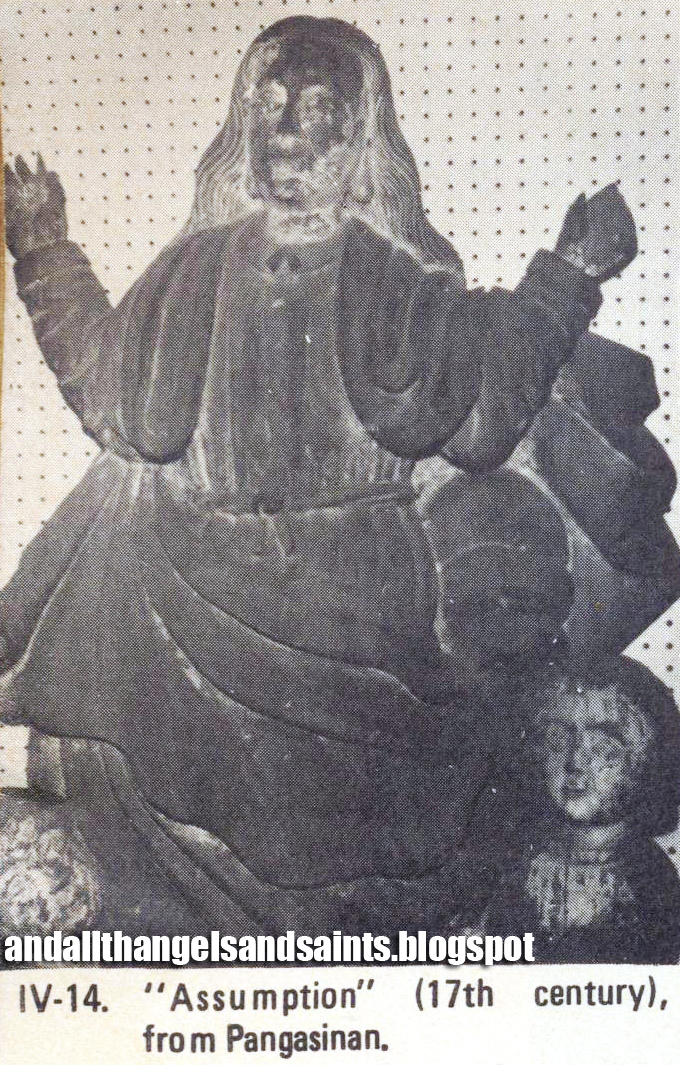
| ASCENSION, FOLK SANTO |
![]() |
| STO. DOMINGO GUZMAN & STO. TOMAS DE AQUINO |
![]() |
| POLYCHROMED RELIEVE |
![]() |
| BUEN PASTOR/ PASTORA |
![]() |
| RELIEVES |
![]() |
| PAINTED ICON ON WOOD |
![]() |
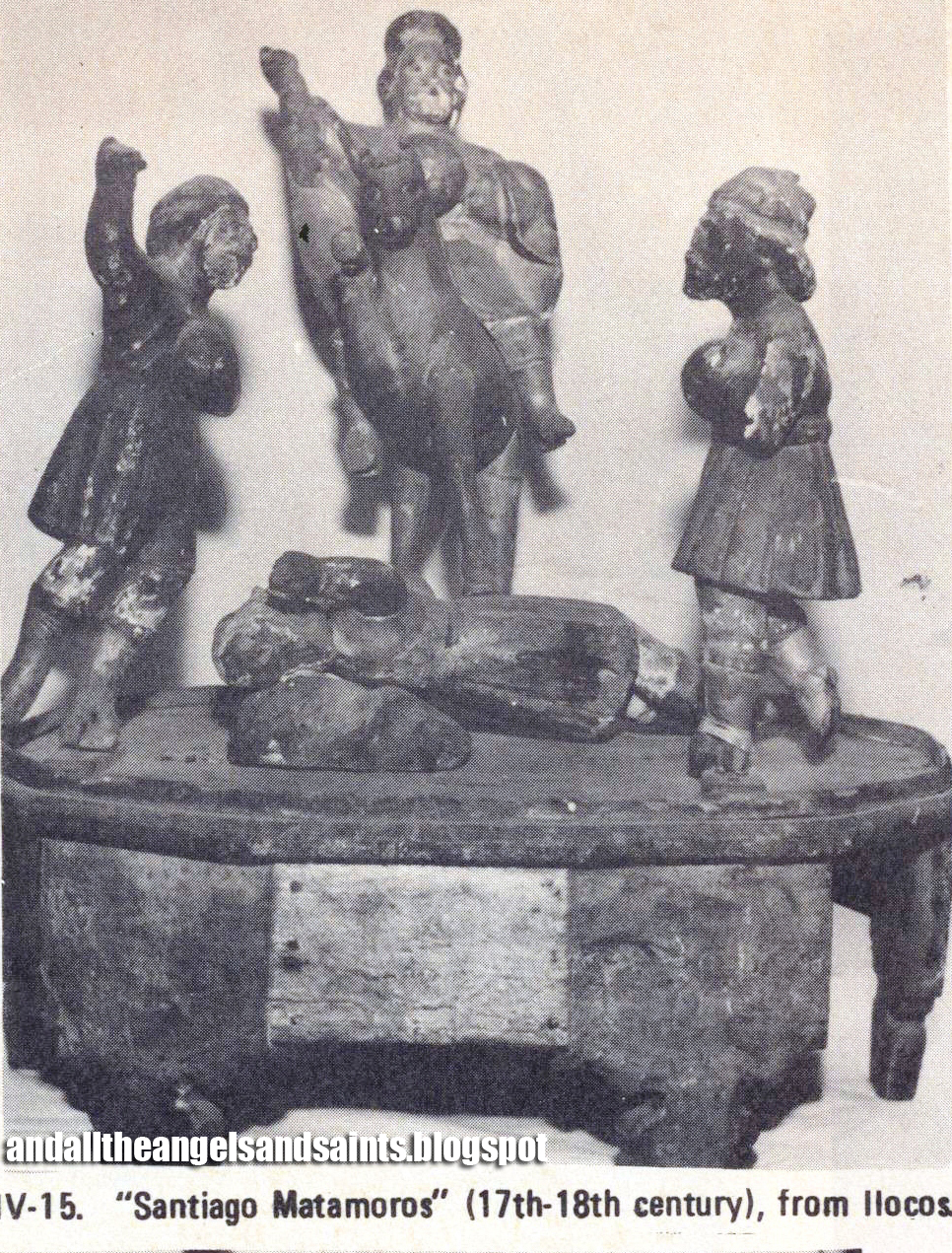
| ST, JAMES, THE MOORSLAYER FOLK SANTO |
![]() |
| OIL PAINTING ON CANVASS |
SOURCES:
UST MUSEUM OF ARTS & SCIENCES COLLECTION, Printed Catalog, 1970s
Subscribe to:
Posts (Atom)