Showing posts with label antique santos. Show all posts

Wednesday, June 17, 2026

375. SANTOS DE PALO: The Household Saints of Puerto Rico

Featured in this excerpted article are selections from the exhibition “Sants de Palo: The Household Saints of Puerto Rico, organized by guest curator, Yvonne Lange, and shown at the Museum of American Folk Art in N.Y. from Jan. 1992-April 1994. The objects in the exhibition were drawn from the collection of Alan Moss Reveron of New York City.


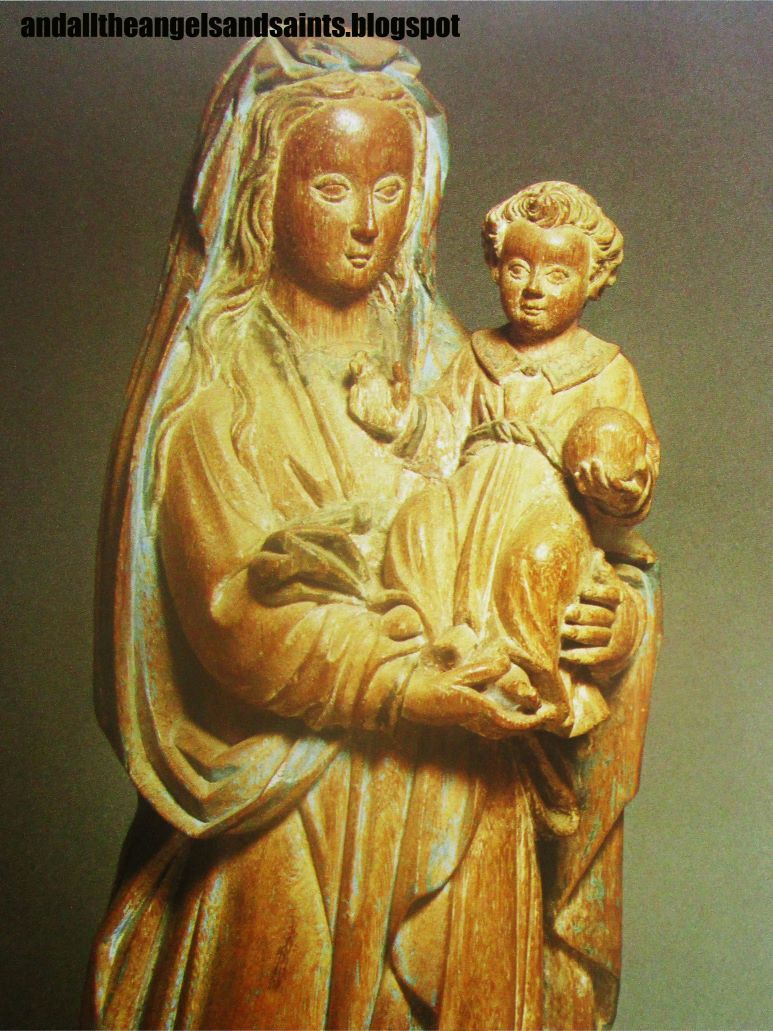
By just viewing the religious artistic expressions of many Puerto Rican santeros, one can see the intertwined past of two countries, by comparing the similarities and the contrasting differences with the santo carvings of the Philippines, which, like Puerto Rico, was Spain-owned, steeped in Catholicism, introduced by their colonizers. 


Like Filipino carvers, santeros were untrained, and often worked from their imagination or by using old religious prints as guides for the saint’s iconography. Majority of the output were folksy in style, rather naïve, though a few were close to realistic—with better proportions, and superb painting,


The major difference is that, many of these Puerto Rican santeros were known and well-documented, while early Filipino artists remain anonymous. Most Puerto Rican samples average about 8” in height, while Filipinos examples show a wider range of sizes, from miniatures, tabletops, to processional and church size-images.


There are also expected differences in the representation of subjects, due to local devotions. A Filipino would be able to recognize, for example, a Puerto Rican-carved San Antonio de Padua or San Miguel., but perhapans, not Virgen de Monserrat or La Trinidad; the common Puerto Rican version shows 2 human forms (God, Son) and a dove representing the Holy Spirit. Filipino examples prefer showing a trio of look-alike persons.


Like the Philippines, the art of the Puerto Rican santero represents a rich and a varied legacy of imagery and artistic expression, often looked as a vocation, and not a trade.

SOURCES OF PHOTOS & INFO:

“Santos de Palo: The Household Santos of Puerto Rico” Exhibit Catalog, © 1991, The Museum of 61 West 62nd St., N.Y., N.Y. 10023.

Thursday, April 30, 2026

373. APO IRO! APO IRO! Discovering the Year-Long Cult of St. Peter in Apalit, Pampanga, by Ross M. De Leon

(Transcribed from the magazine article published on Weekend Malaya 20 Sept. 1987)

By Ross M. de Leon, Photos by Zek Barroso & Jolly David

Apalit town becomes exceedingly alive from June 28 to 30 every year. It is when the whole town becomes one and celebrate the feast of Sta. Peter whom folks lovingly call Apo  Iro. Actually, the people get busy as early as May when the fiesta committee members start mounting the bamboo poles for the buntings.

That the Apaliteños put their minds and hearts in the fiesta event is eveident in the buntings alone. The colors are well-chosen, the hangings have identical shapes and sizes.Arranged very close to each other, the buntings would look like one bg canopy. If one views it from the window of a century-old two-storey house, it turns into a magnificent rainbw that dips somewhere in the Pampanga River.

With a band playing fiesta tunes and people coming in with their glorious smiles, the scene takes a different appeal. It is as if time hangs suspended for three days and everyone is reborn. Nothing occupies the people’s attention except to give their best to Apo Iro. The life-size image in pure ivory is 287 years old. It is the only on in the country which sits on a throne.

Most of us are familiar with St. Peter in an upright position holding a rooster and keys. But Apo Iro of Apalit is a magnificent Prince of the Church in papal robes. Fr his feats, he wear a three-tiered crown symbolic of his being a first Pope. He has a scepter, a huge cross around his neck, a ruby ring and keys. On other days, Apo Iro wears a simple, priestly robe, not the old pajamas and baseball cap he used to. “A pope would never appear in public wearing pajamas, would he?”, asks Rick Badenhop who is married to the camarera, Erlinda Sazon-Badenhop.

Through the Years. It is Linda’s ancestors, specifically Don Pedro Armayan Espiritu, who bought Apo Iro t the country. Don Pedro got the image done in Spain including its original crown, scepter, ring , keys, necklace , cross, the fisherman’s shoes in pure slver. All those have remained intact since Apo Iro’s arrival in 844 at the old home of Don Pedro in Alauli, Apalit. Don Pedro transferred it to a bigger house in Capalangan and has stayed there ever since.

St. Peter’s shrine in sitio Capalangan, Apalit, Pampanga

From 1974 till now, Apo Iro has been under the care of Dña. Elisa Sazon, a direct descendant of Don Pedro. The old lady died in May this year which made her daughter Erlinda, the new camarera.

The family has undertaken the awesome task of being host to Apo Iro’s numerous visitors throughout the year. But it is on his feast day when the preparations are even bigger. Linda, a well-known dentist, is not daunted by the responsibilities for she has fund the perfect partner  in Rick. The latter is a busy executive of Equitable Bank and has accepted Apo Iro graciously as part of his life.

The very old Spanish home of Rick and Linda opens its doors to everybody ob Apo Iro feast day. Rick reveal as , “we have to hire no less than 40 cooks to feed the devotees for free.” About 10 to 20 cavans of rice are needed each year, four large pigs, 300 peces of chicken, 40 kilos of beef, and a jeepload of bihon and not less that 30 cases of softdrink are consumed. “Of course, there are other ingredients and other items butthose are the staples. The cash donation may reach up to Php 15,000 but we always add Php20,000 to that”, declares Linda.

Devotees expecting miraculous cures for rheumatism, asthma, and other ailments.

Aside from which, the family spends over Php3,000 for the coconut oil which the devotees request. Then there’s the maintenance of the chapel and the garden built in 1981 which come from the Badenhop’s purse. “We will keep the tradition the way Linda’s parents and ancestors did it. You cannot just close the shrine for lack of fnds. We believe that Apo Iro will help in every way,” says Rick without hesitation.

The Badenhop’s faith in the miraculous power and generosity of Apo Iro is echoed by the devotees who flock by the thousands. Maria Santos, a 68 year old resident of Caloocan, and her whole clan come yearly in 4 jeepneys. There are 80 of them and they have been faithful to Apo Iro for the last six years. “Lahat kami pati dalawang apo ko, pinagalig ni Apo Iro,” remarks Aling Maria, a furniture shop owner.

Aboard the barge are Apo Iro and the Virgin Mary on their 6-hour  fiesta time journey to the Apalit Cathedral.

She herself goes down the river when the fluvial procession begins. The woman explains, “Dati hindi ako makalakad dahil sa rayuma sa pareho kong paa. Pero simula nang magdebosyon ako kay Apo Iro, gumaling na ako.” In between fiestas, Alig Maria usues coconut oil to massage her feet. “Mabilis ang ginhawa. Ganon din kapag nagbabad ka sa ilog na dinadaanan ni Apo,” came the simple declaration of faith. Her two grandchildren were rid of their asthma again through the water and oil from Apo Iro.

There’s Felisa Cabildo Albina who is now 73 years old and widowed. She began her panata at 17. Aling Feling’s eyesight was failing because of cataract, “pero iniligtas ako ni Apo Iro.” She used to suffer from hypertension and severe headaches. But she does not look her age nor does her illness seem to bother her when she dances on the street with other devotees. This, they do, when Apo Iro leaves the shrine for the población and on the day that he returns.

Felisa Albina, 73, has been dancing for Apo since 1921.

The dancers bring with them all kinds of leaves but especially guavaleaves. “Kahit anong halaman basta isinama kayApo Iro nakagagaling,” relates Aling Feling. “Pakulo ka lang ng tubig at yoong dahoon pag may sakit ka ng tiyan, ulo o lagnat at tiyak na wala.”

For this year’s festa, however, there were signboards requesting devotees not to destroy the plants. Rick points out, “They can get the leaves but nothing should be uprooted. We spend a lot in the upkeep of the plants.”

Miracles? Another devotee of Apo Iro is 14-year old Nicomedes Estrella of Iba. He was only 4 years old when he got leukemia and his parents were told that he would die soon. Once, when he was delirious, he told his father, “Itay, dalhin mo ako kay Apo Iro.” He and his parents stayed in the chapel for two weeks after which Nick recovered for good. He is now a healthy teener who for the last 10 years has been spending the last 3 days of June with Apo Iro.

Aling Maria, Aling Feling and Nick are only three of the tousads of devotees who greet Apo Iro on his feast. They wait rain or shine till Apo is brought out from the chapel and down into the river. The chanting of “Apo Iro, Apo Iro!” is awesome, the kind that makes your hair stand on its end and sends shivers down your spine. There is a marvelous rain of petals, confetti and leaves followed by a thunderous applause. Dancing on the street continues as Apo Iro is carried to the river by the Knights of St. Peter.

Devotees Mary Indiongco, Knights of St. Peter Macario Vargas 
and Amado Arceo with Dr. Erlinda Sazon-Badenhop in front of the
287-year old Apo Iro.

Despite the gaiety, the festivities do nt turn into a circus that would lessen the solemnity of the event. More people await Ao Iro at the river where he takes a barge. From Capalangan, he is transferred to a bigger, more splendid float at the point where the Calumpit and Pampanga Rivers meetfor his 6-hour journey to the Apalit población.

The fluvial procession is a sight to behold, a powerful feast of colors for photographers. The large float carrying Apo Iro and and the Blessed Mother is followed by smaller bancas, barges, etc. all filled with people. The banks are lined with more devotees who immerse themselves in the water for everyone believes that this is the only time of the year when the water becomes curative through Apo Iro.

A vigil and procession are held at the Apalit cathedral for a day when Apo Iro returns to the shrine in Capalangan. The return journey is awaited with greater joy and enthusiasm as if the Apo left the sitio not for a day, but for years. Dancing, dousing of water, and feasting are the order of the day. The folks stay till late at night in thanksgiving, for their belove Apo Iro is back and safe.

Friday, July 11, 2025

360. The Bone Collector: A SANTO ÑINO FIND IN INTRAMUROS

BONE-HEAD SANTO NINO with Wooden Body

There was a time that Intramuros had a small antique shop section, thanks to the development of a heritage district that started in the early 1980s. The district included the restored Casa Manila, a 19th century house at the Plaza San Luis Complex, along Gen. Luna St. The complex attracted different establishments like restaurants, souvenir shops, arts and antique shops.

The Nino, as found, Galeria Andrea, ca. 1998

One of the popular shops located here was Galeria Andrea, owned by Pampanga congresswoman Andrea Domingo, who would later become Immigration commissioner and PAGCOR chairman. She turned her antique collecting hobby into a modest business in Intramuros, and it was in her shop that I found this small, but lovely Sto. Niño of wood and bone, sometime in 1998.

No more than 10 inches tall, including the base, the santo is depicted in a royal French costume, reminiscent of the outfit worn by King Louis XV. The Sto. Niño of Malolos wears a similarly-inspired outfit. Obviously, the image was repainted in garish white, blue and dark brown. Random painted flourishes decorate his tunic, highlighted by a body chain over the torso.

But what drew me to the santo was the face, which, initially I thought to be ivory as it was so white. It was the only material made of bone—everything else, including the hand holding a small orb (one hand is missing)--were made of wood.

I had to take a second and third look to see if it was really made from bone, but so well done—from the neck folds, define aquiline nose, to the wisp of his smile, and his side-glancing glass eyes—all contributing to its pleasing, amiable expression.

It makes one think that the head deserves a better body, maybe like those manikin-types, reserved for richly-dressed ivory santos. But this Niño has its own distinct appeal, and the wooden body itself is well-carved, and well-proportioned. Note, for example, the careful facial carving, the symmetrical folds of the cape, and the stance of the booted legs, with one knee slightly bent.

The shallow relief carving of the peaña (base) is a bit difficult to figure out; vaguely, I could make out a heart with a cross on top, entwined with thorny vines. The image was meant to wear a wig, and perhaps, a crown. De bulto images with wigs are more common for female saints, making this Niño a scarce find.

Antique bone santos have always played second fiddle to ivory santos, which are more prized and therefore, more expensive. But to me, my bone Sto. Niño find evokes the same feelings of appreciation and nostalgia for our religious folk art as when I see ivory santos--so in that sense, this Niño is just as precious and cherished for keeps!

POSTCRIPT:

MRS. ANDREA DOMINGO opened GALERIA ARTS & ANTIQUES in LRI Plaza, Jupiter St., in Makati , and she kept the business for 26 years. Today, her remaining collection are housed in he home city museum in San Fernando, Pampanga called MUSEUM OF PHILIPPINE ARTS AND CULTURE (MOPAC). One gallery is dedicated to her incredible santo collection:

Sunday, May 12, 2024

359. SAN ISIDRO LABRADOR: A Bone to Pick, A Santo to Fix


Some 15 years ago, I was driving in the direction of Lubao when I found a row of stores along the road, and one instantly caught my eye: “PRINCE SECOND HAND-LUMBER and Antique Shop”.  Of course, I had to stop. When I came in, I was met by a young couple, and their little boy, who was carrying an old silver-plated monstrance. I asked if the monstrance was for sale, and the father said, it is, but right now the boy wouldn’t let it go, as he was “playing prusisyon”, walking around the room, holding the monstrance, pretending to be a priest in a procession.

The father said to give him a few minutes while he talk with his son—Prince--who, at that point was adamantly holding tight to the monstrance and would not let it go In the meantime, he said, please feel free to check the other stuff in his warehouse.

Thank God, the big piles of lumber from demolished old houses were separated from the “antique” section of his shop, that included vintage furniture, aparadors, salvaged architectural details and iron grills. I noticed a few religious items there: an escayola Buenviaje in its own urna, a framed communion certificate.

There must be more where they come from, I thought to myself. And sure enough, when I opened a comoda, an inner shelf revealed something extraordinary—a naked santo, with a thin manikin body, outfitted with a solid bone head and hands! 

One look, and I saw a vision of San Isidro Labrador holding a farm implement. The shop owner entered the room at this point, ending my reverie. “Oh, you found the old doll”, he said. I corrected him by saying that the figure is, by all indications, a santo. “Ah, I didn't know it's a santo! That means it will be a little bit more expensive then”, he continued. Me and my big mouth.

When he mentioned the price, well, it wasn’t bad as I imagined it to be! In fact, I could pay for it now! So that’s how I got the bone-faced San Isidro home.

The next work week, straight to the taller of Dr. Raffy Lopez the santo went. The 10 inch high santo, he said, was finished well, considering it was bone, a medium difficult to carve as it is brittle, breaking easily. This does not allow the carver much leeway to carve in finer details, which explains why bone santos do not have well-delineated faces and hands, looking stiffer, more folksy than their ivory counterparts. But this did not diminish at all the charming quality of this piece.

There was a possibility too that the santo was originally a San Jose, as it was found without identifying elements associated with San Isidro, like an ox, kneeling landlord, a plowing angel. But Dr. Lopez was confident he could recreate San Isidro’s likeness using this bone figure, even without those iconographic parts.

The first thing he need to do was to look for a proper base for it, and he found one—a folksy painted mortar base with remnants of green and dull yellow colors. Once he had that, he started his work on the bone santo, a process that took a month.


When, finally, he revealed SAN ISIDRO LABRADOR, the results were dramatic as seen from these photos. Only the lips needed to be defined, as the bone head still had its original glass eyes and painted beard. A new jusi wig and an old halo from the doctor’s collection topped the head of the santo.


The deep yellow satin cape and the knee-length drab green tunic complemented the colors of the base, which raised the santo’s height to about 16 inches tall. The gold embroidery was limited to the hems of the cape and the lower part of the tunic, fitting for a male saint.


The restores San Isidro sports knee high, leather boots, fashioned from soft imitation leather scraps. His left hand clutches a new, long-handled shover made of wood and tin. As the santo was tall and narrow. I had a customized glass case made for him, similar to Japan-made glass doll cases.

I only have 5 bone santos in my collection, and this restored San Isidro is one of the more special ones because of the story of its discovery, finding it by mere happenstance. 

Oh, and the silver monstrance? I got that too, the next day, pried off from the hands of Prince by his father, while he lay sleeping. I wonder what happened when he woke up. He should be about 18 years old now—is he pursuing a priestly vocation? I wouldn’t be surprised if he did.

Sunday, September 24, 2023

358. DIE PHILIPPINEN, Perle im östlichen Meer: SANTO PAGES

PROCESSIONAL MATER DOLOROSA IN IVORY

DIE PHILIPPINEN, Perle im östlichen Mee
r (THE PHILIPPINES, Pearl of the Orient Seas) is a German-language book, published by Lipp in 1985, with contributions from the Staattliches Museum fur Volkerkunde Munchen. A whole chapter was devoted to Spanish colonial religious art of the Philippines , and these photos are from the book.

SAN ISIDRO LABRADOR

SAN JOSE

SAN JOSE, INMACULADA CONCEPCION
from Bohol

SANTO NINO

SAN MIGUEL ARCANGEL, icon painting

AN ALTAR OF SANTOS

IVORY MADONNA

IVORY HEAD OF THE BLESSED VIRGIN

MADONNA AND CHILD,  with an intricately
carved gown and base.

NTRA. SRA. DE SALVACION

TRYPTICH ICON OF SAN VICENTE FERRER,
SAN ISIDRO LABRADOR AND STO. NINO

TWO SANTOS OF THE BLESSED VIRGIN

A PAIR OF FOLK MARYS

A PAIR OF FOLK MARYS

SAN ROQUE, WITH MISSING ANGEL

LA PIEDAD

CRUCIFIED CHRIST

BOHOL VIRGIN IN A POLYCHROMED URNA

THE BOOK: DIE PHILIPPINEN. PERLE IM OSTLICHEN MEER