Showing posts with label Ramon Gutierrez. Show all posts

Tuesday, September 4, 2012

122. SACRED HEART MADE REAL


This wooden Christ head with matching hands is one of the earliest antique santo heads that I bought for my collection. I had forgotten where I got it, but it was definitely from a Mabini antique shop and that I paid Php 6,000 for it, inclusive of the damaged hands, which I thought was just too much then.


The head itself shows some wear and wood damage at the neck. But the original encarna, though a bit scruffy, is intact, which shows that the santo head is really old, my only reason for buying it. I was not particularly impressed by the carving and I thought the narrow-faced Christ was a bit ‘cross-eyed’. 


By surprise, I found a similar Christ head in the workshop of Mang Kiko Vecin—a twin, in fact, with the same narrow head, same ‘banlag’ (cross-eyed) eyes and shallow beard carving—leading me to believe  that these were mass-produced heads from some early 20th century Manila religious shop.


Nevertheless, I took it home and for the longest time, I kept figuring what to do with it. The hands with missing fingers bore wounds. It could be a Sacred Heart, although popular depictions show Christ with a raised pointing finger. I could also have it made into a Salvador del Mundo, standing on a half-globe with arms outstretched. Christ the King was another possibility, a standing one, like that from Vigan. But since I had other priorities, I put this Cristo project momentarily in the sidelines.
 

Two years ago, an officer from our church asked to borrow a Christ the King image from me. But the only one I had was an altar-size seated Cristo Rey in an urna, too small for church use. This year, I was once again asked if I had a Sacred Heart Christ that I can lend for church use.
 

It was then that I decided to proceed with the restoration project for a Sacred Heart statue, using the antique Cristo head and hands—convertible to a standing Cristo Rey image!


Off to Mang Kiko Vecin I went, for the construction of the body. I thought it would be an easy task, as it took only three weeks for the carvers to make the body.


The finishing was done in another week or so—followed by the drying process. I had earlier told Mang Kiko to have the body painted and white, but when I was called to check on it—the body was painted blue!
 

That was no big deal compared to the retouching of the head.  The head had some discolorations and pockmarked holes, but Mr. Vecin wanted to preserve the original encarna by just doing  light washes on the facial scruffs. But the encarnador couldn’t get the right mix of color right, and the first attempt had the Cristo head looking like it had  ‘an-an’ (ringworm) all over the face! 


The damages on the wood couldn’t be repaired completely by putty or epoxy, until I suggested the use of clay epoxy which I recently discovered and which can be easily be placed in crevices and molded by hand. The hands were no problem at all, although the painter had the same color mixing problems.
 

The new,  flaming Sacred Heart to be set on Christ’s breast was carved separately and then set on brass rays. The image, standing on a simple half globe base, measures 52 inches from the top of Christ’s head to the bottom of His peaña. 


Dressing up the image was next.
Since I wanted a set of no-frills vestment, I asked Ramon Gutierrez to create the robes of the completed Sacred Heart, to be done in traditional colors of white (for the tunic) and bright red (for the cape, with a pink lining).  The draping was also conventional, with the cape tucked under the armpit, with one end over the shoulder. As Sacred Heart, the image now looks like this:


Meanwhile, the other metal accessories that will help transform this Christ image into a standing Cristo Rey were ordered separately from my pukpok (metalsmith) boy from Mexico, Jeric Canlas. Specifically, the image needs a royal crown, a scepter and an orb.


A few more weeks of work and my Christ image--as Cristo Rey-- was ready to be installed at the Divine Grace Church, in time for the Nov. 13 Christ the King celebration.


I am happy with the results of the restoration, and happier still with the convertible transformation—from Sacred Heart to Christ the King. Viva Cristo Rey! Viva Sagrada Corazon de Jesus! 

Wednesday, August 1, 2012

119. Santo Stories: THE FALL OF CHRIST


"Ang Pagkarapa ng Panginoon" represents the Third Fall of Christ while bearing the cross en route to Calvary. The tableau includes figures such as soldiers in the act of whipping and dragging Christ, with Simon Cyrene holding on to the Cross, in an act of supporting the fallen Jesus.

The santo figures were commissioned by the Veron-Dulay-Cloma Family, in the Parish of Santo Cristo (Caingin, San Rafael, Bulacan) on March 2007, from the workshop of Francisco Vecin of Makati. In memory of Felipa M. Veron-Dulay (16 May 1912/5 October 2004).


MEDITATION ON THE FALL OF OUR LORD

We adore you, O Christ, and we bless You, because by your Holy Cross, You have redeemed the World.
 O Jesus, it was for our sins that You bore the heavy burden of the Cross and fell under its weight. May the thought  of your sufferings make us watchful over ourselves and save us from falling into sin.
O Christ, our repeated falls into sin have added the burden that you carried for our redemption. As you are weakened by the weight of our sins, we are the cause of your fall. Please give us the strength never to offend You again.
O Lord, we beg you, by the merits of your most painful fall, to pardon our frequent relapses and our long continuance in sin. May the thought of Your sufferings grieve us and move us to make frequent acts of love and reparation.

Our Father...Hail Mary...Glory Be...

Sunday, June 6, 2010

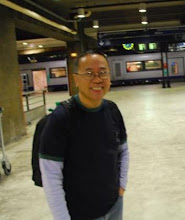
15. The Saintmakers: RAMON GUTIERREZ, Designing for Divinities

This exclusive interview series first appeared as SSF Personalan on Semana Santa Filipinas, the biggest online group of santo owners and enthusiasts. It features personalities directly involved in the “santo trade”: ecclesiastical artists, carvers, artisans, encarnadors, painters, lateros, bordadors, costureras, cultural activists and avid santo fans. It is also aimed at recognizing the unsung contemporary talents behind our religious arts—how they started, how they honed their skills, and how it is like to run a santo business today.

- - - -

A designer and maker of santo garments who has been silently making a name for himself in the last few years with his unique and practical creations is our subject for this feature on ecclesiastical artists. MR. RAMON GUTIERREZ has put his marketing background to good use by positioning himself as a maker of fine-quality, yet affordably-priced santo clothes, thus finding a special niche in the specialized, yet competitive, religious vestment industry. Quiet and soft-spoken, Ramon, through an afternoon phone chat, shared with us his beginnings and the attendant challenges of running a santo garments shop.

Q: TELL US, RAMON, HAVE YOU ALWAYS BEEN INTERESTED IN FASHION DESIGN? WHAT WAS YOUR ACADEMIC BACKGROUND?

RAMON: I took up Marketing in college, but even back then, I had always loved drawing and designing. So, back in 1989, my business partner and I decided to open a shop, a mainstream fashion business, where we supplied made-to-order clothes.


Q: SO, WHAT GOT YOU INTERESTED IN DESIGNING AND EXECUTING GARMENTS FOR SANTOS?

RAMON:
I had an image that participated in the Grand Marian Procession in Intramuros — Mater Amabilis. It’s a vintage piece that I found almost forgotten in an antique shop. I even remember how much I paid for it — it was about PhP400. I had it dressed in traditional embroidered clothes, the prevailing style then.

My friends who were fellow santo aficionados then asked me if I could create “daily use” clothes for their santos. As a personal favor, I made them these simple everyday clothes and that’s how I got started in santo dressing.

The major turning point however, was meeting Mr. Francisco Vecin, who took note of my work and who further encouraged me to explore the possibility of dressing santos on a more regular basis. Pretty soon, I was contracted by Mang Kiko to provide designs and to execute the garments for his carved santos. You can say that my love for fashion and for religious art has spawned a business that combines both interests, which I continue to do to this day.

Q: BUT CREATING CLOTHES FOR REAL PEOPLE IS DIFFERENT FROM DESIGNING FOR SANTOS, ISN’T IT? SO HOW DID YOU PREPARE YOURSELF FOR THIS SEEMINGLY SIMILAR, YET DIFFERENT SKILL?

RAMON: Oh, most definitely! Designing for living, breathing, moving people is different from designing for static images. An image has a fixed posture, so you must study the lines of the body so that you will know where to place the trims or the focal point of the vestments, for instance.

There are so many considerations in dressing up santos. There are certain limitations in cutting. Kitang-kita ang fit. You have to give special focus to details. A bastidor body is always difficult to execute, because there is always the probability na laging masikip ang skirt when it is not correctly measured or done. That’s why I always make a padron na tela (cloth pattern) to avoid errors.

You learn a lot of things along the way. You also learn to be inventive. Dressing a single standing santo looks easy, what with its simple A-line and a half-moon cape that you simply drape. But in my designs, I also introduced variations like a rectangular cape, a rectangular cape with half moon, etc.


You study certain draping techniques so that you will know the placement of embroidery to make the dress more pleasing to the eye. Even thread sizes have to be taken into consideration because they have a particular effect on the overall look of your creation.

Q: YOU ARE NOTED FOR YOUR SIMPLE, NO-NONSENSE FASHION STYLE WHEN IT COMES TO SANTOS, IN SHARP CONTRAST TO THE TRADITIONALLY MORE-FAVORED, HEAVILY-EMBROIDERED VESTMENTS.

RAMON: It was a conscious decision, because I wanted to offer a more affordable alternative to embroidered garments, whose prices, as we all know, are way beyond the reach of ordinary santo owners. I believe that there is a market for the type of product that I offer, with that kind of style, practically priced for everyone.


When Mang Kiko asked me to give santo dressing a try, I had to study how a traditional garment is constructed. As you know, it usually comes in separate, “putol-putol” parts. Assembling these can be laborious and time-consuming. Now, I have come up with clothes that can be easily put on and styled with just a few nips, tucks and drapes — that even a santo owner can do by himself. Fool-proof. That can only be possible with the kinds of designs that I create.

Q: ANY PARTICULAR DRESSING CHALLENGE THAT YOU REMEMBER?


RAMON: The Last Supper done by Mr. Vecin for a Cavite client was one particular dressing challenge, because it required studying the layout and blocking of the different figures, therefore each had to be draped separately and differently! And if you see the presentation, the figures are seated facing each other, thus exposing their backs, so now I also have to pay attention to the back draping as well. It took a whole day to dress them up!


It’s the same principle I observed for the Transfiguration tableau in Paete. The figures are different but yet they must remain cohesive as they are part of a group. A linear motif unique to each vestment was what held the look together.


Q: WHAT FABRICS DO YOU FAVOR? WHERE DO YOU DRAW YOUR DESIGN INSPIRATIONS FROM?

RAMON: I go for upholstery fabrics. My favorite is brocade because it’s got body, and it has a stiffness that grows softer over time. I source these fabrics locally, in Divisoria, mostly imported from China. The cords and trims I also get from there, made mostly in China, Korea and Japan. It is quicker to sew trims on vestments rather than cordings, which have to be handsewn.


For my designs, I find inspiration in the architectural details of churches. I then sketch the initial designs until I get them right. I also follow a “one person, one design“ policy, so that no two santo owners will have the same garment design.

Q: PLEASE SHARE SOME TIPS ON HOW TO CARE FOR SANTO VESTMENTS.

RAMON: My creations are highly washable and more hardy than traditional vestments, which can be cleaned by dry-cleaning only. My garments can just be soaked in warm water, then quickly washed in soap. Tapos, pwedeng plantsahin with the fabric turned inside out.

Q: WHAT ARE THE CHALLENGES IN THE SANTO GARMENT BUSINESS? ANY PLANS FOR THE FUTURE?


RAMON: The challenge is in making the business viable by ensuring job orders year-round. As it is now, may seasonality ang pag-gawa ng santo clothes. Usually, orders come in December or January. Which is in synch naman with my mainstream made-to-order fashion business, which starts to peak from October, all the way to the holiday season. So I am assured of constant business over this time period. It would be better though if santo owners can place their orders earlier so that the load is evenly spread out the whole year through.

Recently, a friend of mine put up a business that specializes in ecclesiastical vestments. He’s been wanting me to join him. Of course, this is a new discipline altogether. It will be a whole new ballgame for me, so once again, I need to study the challenges of this more exacting art, as one is required to strictly adhere to certain liturgical guidelines.

Finally, I also want people to have a heightened awareness about the work that I do, as part of their education process — that I offer an alternative that’s easier and more affordable for every one.